DIN 2353 Bite Type Fitting Manufacturer, Supplier & Exporter
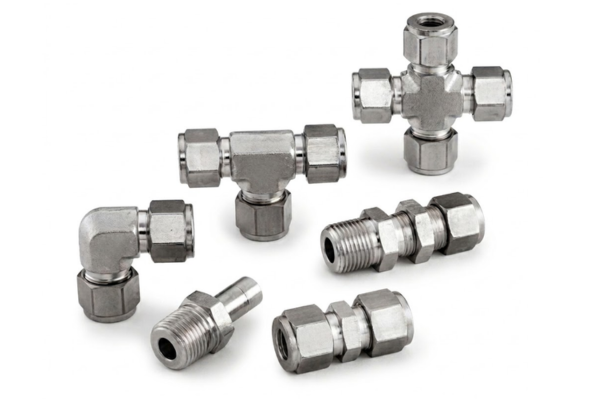
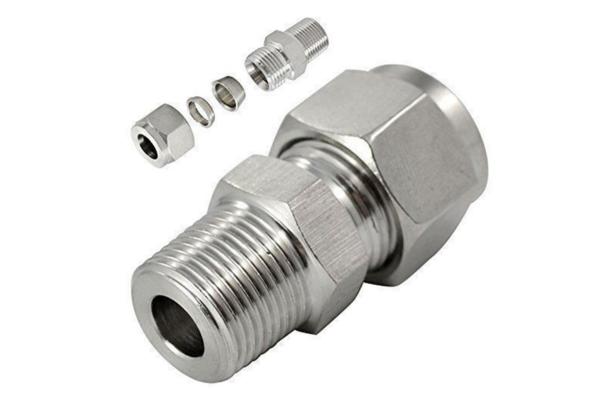
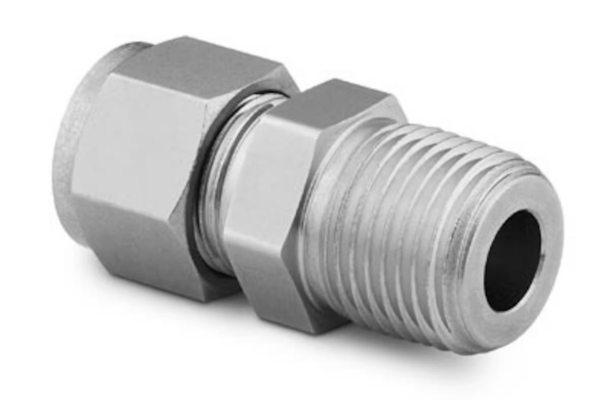
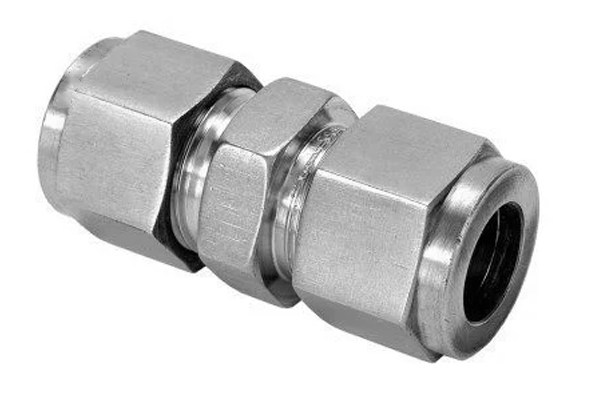
A DIN 2353 bite type fitting, also called a cutting ring fitting, joins metric tubing with a hardened ring that bites into the outside of the tube to grip and seal it. Raaj Fittings manufactures and exports DIN 2353 fittings to ISO 8434-1 in the LL, L and S series, in zinc-plated carbon steel and stainless steel, for metric tube ODs from 4 mm to 42 mm.
Bite type fittings are the standard tube connection for hydraulic systems built to European practice and are widely used across Europe, the Middle East and Asia. They give a positive, metal-to-metal joint that is compact, easy to assemble and rated for working pressures up to 400 bar in the heavy S series.
All fittings are supplied with EN 10204 3.1 mill test certificates and full material traceability.
We export DIN 2353 bite type fittings to instrumentation contractors, OEMs and distributors across the Middle East and GCC, Europe and the Americas, in metric and imperial tube sizes with NPT or BSP ends to suit each market.
DIN 2353 Bite Type Fittings Specifications
DIN 2353 / ISO 8434-1 (metallic tube connections — bite type)
LL (extra light), L (light) and S (heavy)
L series up to 250 bar; S series up to 400 bar (at ambient temperature, depending on size)
Metric tube 4 mm to 42 mm OD
Body, nut and cutting ring
Tube ends; BSPP, BSPT, NPT and metric threaded ends
Zinc-plated or phosphated carbon steel; stainless steel natural finish
EN 10204 3.1 mill test certificate; EN 10204 3.2 on request
Materials & Grades
We supply din 2353 bite type fittings in the following materials and grades. All grades are supplied with EN 10204 3.1 / 3.2 Mill Test Certificates.
Stainless Steel DIN 2353 Bite Type Fittings
Stainless steel is the standard material for instrumentation tube fittings across oil and gas, petrochemical, pharmaceutical, and offshore applications. SS 316L is the most widely specified grade.
The industry default for instrumentation tube fittings — low carbon content prevents sensitisation; molybdenum addition provides superior chloride and acid resistance versus 304 grades.
Superior chloride and acid resistance — used where chloride exposure, marine atmosphere, or mild chemical service requires better corrosion resistance than 304.
General corrosion resistance at lower cost than 316L — suitable for water, steam, mild chemical, and food-grade applications where chloride exposure is limited.
Carbon Steel DIN 2353 Bite Type Fittings
Carbon steel tube fittings are used in hydraulic systems, compressed air, general industrial service, and non-corrosive process applications where stainless steel is not required.
Precision-machined carbon steel bar stock — used in hydraulic circuits, compressed air distribution, and general industrial instrumentation where corrosion resistance is not required.
Electroplated zinc or phosphated finish for enhanced surface corrosion protection — used in carbon steel DIN 2353 hydraulic fittings and general instrumentation in non-aggressive environments.
How a Bite Type Fitting Works
The cutting ring has sharp internal edges. When the nut is tightened, it pushes the ring into the 24° cone of the fitting body, which forces the ring inwards so its edges cut into the tube surface. This bite provides a positive mechanical hold, and the contact between ring, tube and cone forms the seal. A visible collar of raised tube material in front of the ring shows that the bite has been made correctly.
- Positive grip — the ring bites into the tube for a secure hold under pressure.
- High pressure — up to 400 bar in the S series.
- Compact — short, robust bodies suited to hydraulic manifolds and machinery.
- Standardised — ISO 8434-1 dimensions allow interchange of standard components.
LL, L and S Series
ISO 8434-1 defines three series. LL (extra light) is for very thin-wall tubing at low pressures. L (light) is rated up to 250 bar and is the most common for general hydraulics. S (heavy) is rated up to 400 bar for high-pressure systems. Nuts and cutting rings of the L and S series of the same tube OD are interchangeable, but the bodies and pressure ratings are not, so always confirm the series in your specification.
Assembly
Correct pre-assembly is essential: the ring must be fully set into the tube before final installation. Tubes should be cut square, deburred and fully inserted to the stop in the body. For inch-sized instrumentation tubing, double ferrule or single ferrule compression fittings are used instead. Threaded male connectors link the tube to pumps, valves and cylinders.
Applications & Industries
- Industrial hydraulic power units and manifolds
- Mobile and construction machinery hydraulics
- Machine tools, presses and injection moulding machines
- Lubrication and cooling systems
- Marine and offshore hydraulics in stainless steel
- Process plant hydraulic and pneumatic control
When ordering, give the fitting type, series (LL, L or S), tube OD, thread size and form, and material. See all tube fittings we manufacture.
Testing, Inspection, Marking & Packing
DIN 2353 fittings are produced under our quality assurance process:
- Bar stock verified by PMI testing, with full traceability
- Dimensional inspection of the 24° cone, cutting ring profile, nut threads and hex sizes
- Thread gauging of threaded ends
- Surface finish check on zinc-plated and phosphated parts
- Marking with series, size and material
Supplied with EN 10204 3.1 mill test certificates; EN 10204 3.2 certificates and third-party inspection on request.
Fittings are capped and bagged to keep ports clean, then boxed and packed in seaworthy wooden cases for export; marking, tagging and packing to your specification are available on request.
Why Choose Raaj Fittings for DIN 2353 Bite Type Fittings?
Raaj Sagar Steels has supplied piping components since 2003 and today manufactures tube fittings at two plants in India for buyers in the Middle East, Europe and the Americas.
- Manufactured in-house — DIN 2353 bite type fittings are made in our own plants, so material, dimensions and delivery stay under our control.
- Ready stock, short lead times — common sizes and grades are held in stock for prompt dispatch; other sizes, grades and specials are manufactured to order.
- Certified quality — ISO 9001:2015, ISO 14001:2015 and ISO 45001:2018 certified; PED 2014/68/EU supply available, and NACE MR0175 / ISO 15156 material on request.
- 100% material verification — PMI testing on incoming material and EN 10204 3.1 mill test certificates with every order; 3.2 certificates on request.
- Third-party inspection ready — we regularly work with SGS, Bureau Veritas, TÜV and DNV.
- Export documentation — MTCs, certificates of origin, packing lists and inspection reports to suit projects in the GCC, Europe and the Americas.
- Export packing — seaworthy packing with end and face protection, and packing to your specification on request.
- Fast response — our team replies to enquiries within one business day.
DIN 2353 Bite Type Fittings — FAQs
It is a bite type (cutting ring) tube fitting to DIN 2353 / ISO 8434-1. A hardened ring bites into the tube surface when the nut is tightened, gripping and sealing the tube.
The L (light) series is rated up to 250 bar and the S (heavy) series up to 400 bar. They share nuts and rings for the same tube OD, but the bodies and ratings differ.
LL (extra light) is the series for very thin-wall tubing at low pressures.
DIN 2353 fittings are made for metric tube ODs from 4 mm to 42 mm.
Zinc-plated or phosphated carbon steel for general hydraulics, and stainless steel for corrosive, marine and offshore service.
Yes. We supply DIN 2353 bite type fittings for projects under the European Pressure Equipment Directive (PED 2014/68/EU), with EN 10204 3.1 certificates as standard and 3.2 on request. NACE MR0175 / ISO 15156 compliant material is available for sour service in the Middle East and the Americas.