Push-to-Connect Fitting Manufacturer, Supplier & Exporter
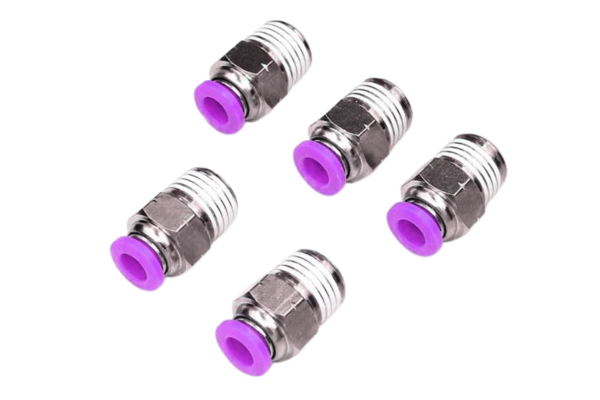
A push-to-connect fitting, also called a push-in fitting, joins tubing without tools: the tube is simply pushed in, and an internal collet with radially arranged teeth grips it while a seal makes the joint tight. Raaj Fittings manufactures and supplies push-to-connect fittings in SS 316 and nickel-plated brass for pneumatic control systems, compressed air distribution and low-pressure water lines, suitable for PU, PE, PA (nylon) and PTFE tubing.
Push-to-connect fittings make installation and changes very fast. Tubes can be fitted in seconds and released by pressing the collet ring, which suits machine builders, automation panels and maintenance teams who reconfigure pneumatic circuits often.
Push-to-connect fittings are supplied with material certificates and full traceability.
We export push-to-connect fittings to instrumentation contractors, OEMs and distributors across the Middle East and GCC, Europe and the Americas, in metric and imperial tube sizes with NPT or BSP ends to suit each market.
Push-to-Connect Fittings Specifications
Stainless steel SS 316 and nickel-plated brass
Typically up to 10 bar (150 psi) for pneumatic service; exact rating depends on size, tubing and temperature and is confirmed with the quotation
Polyurethane (PU), polyethylene (PE), polyamide (PA) and PTFE tubing
Pneumatic control, compressed air and low-pressure water
Straight, elbow, tee and reducing connectors; male threaded studs; bulkhead connectors
NPT, BSPT and BSPP male threads
Tool-free push-in with collet release ring
Material certificate with each supply
Materials & Grades
We supply push-to-connect fittings in the following materials and grades. All grades are supplied with EN 10204 3.1 / 3.2 Mill Test Certificates.
Stainless Steel Push-to-Connect Fittings
Stainless steel SS 316 bodies are used where washdown, corrosive atmospheres or food and pharmaceutical hygiene rule out plated brass.
Superior chloride and acid resistance — used where chloride exposure, marine atmosphere, or mild chemical service requires better corrosion resistance than 304.
Nickel-Plated Brass Push-to-Connect Fittings
Nickel-plated brass bodies are the economical choice for pneumatic and general compressed-air service, where the plating gives a clean, corrosion-resistant finish.
Economical bodies for pneumatic control, compressed air and low-pressure water lines in non-corrosive environments.
How Push-to-Connect Fittings Work
Inside the fitting body are a collet and a seal. When the tube is pushed in, it passes the seal and the collet teeth, then reaches the internal stop. Any pull on the tube makes the teeth bite harder, holding it securely. To release the tube, the collet ring is pressed in towards the body, which lifts the teeth away so the tube can be withdrawn.
- Tool-free — no spanners, ferrules or flaring tools needed.
- Fast changes — reconfigure pneumatic circuits in seconds.
- Reusable — release and reconnect tubing many times.
- Compact — small bodies suited to valve banks and automation panels.
Good Practice
Cut tubing square with a proper tube cutter, check the outside diameter is within tolerance, and push it fully to the stop. Use tubing of the correct hardness for push-in fittings; very soft tubes may need an insert. Push-to-connect fittings are intended for pneumatic and low-pressure service and are not a substitute for metal compression fittings on high-pressure, hazardous or high-temperature lines.
When to Use Compression Fittings Instead
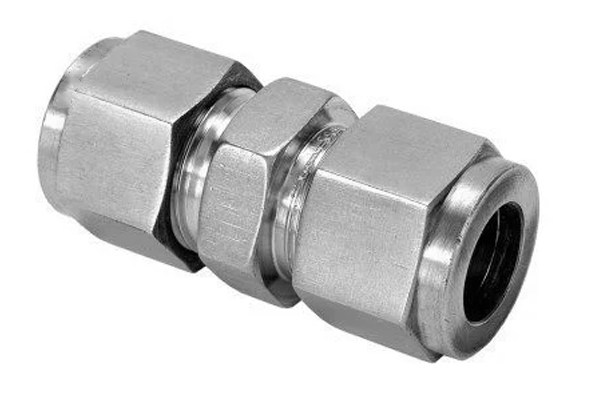
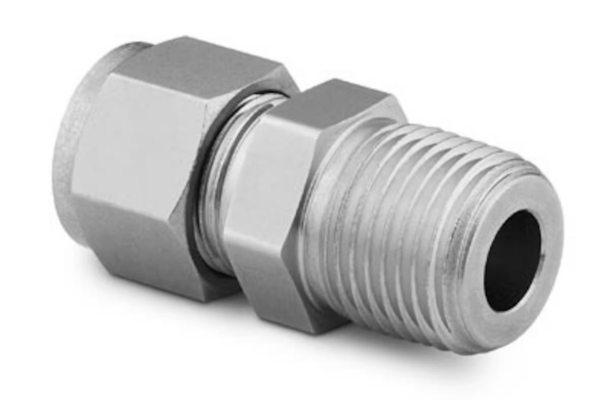
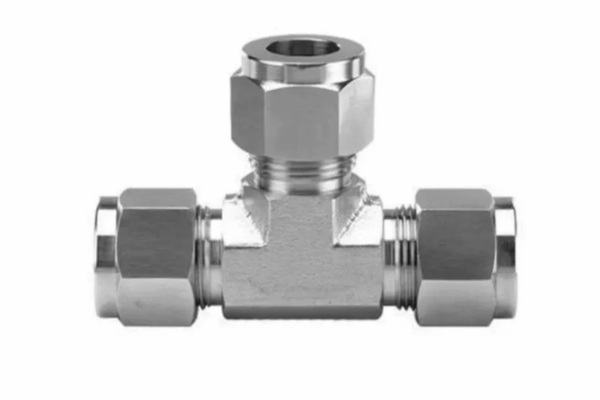
For instrument impulse lines, process gases, high pressures or hydrocarbon service, use metal tubing with double ferrule compression fittings. Metal union connectors, male connectors and union tees give a robust, fire-safe alternative for critical lines.
Applications & Industries
- Pneumatic actuators, valve banks and automation panels
- Compressed air distribution on machines and workbenches
- Packaging, food processing and assembly machinery
- Low-pressure water and cooling lines
- Laboratory and test equipment
Push-to-connect fittings are most often used on the low-pressure side of a system — after the instrument air regulator, at actuators and valve islands — while the supply headers upstream are built in metal tubing with compression fittings. Combining the two gives fast, flexible connections where circuits change often and robust metal joints where reliability matters most. Our team can help you select the right fitting type for each part of the system, and supply metal and push-in fittings together.
When ordering, give the tube OD, tubing material, configuration and thread size and type. See all tube fittings.
Inspection, Traceability & Packing
Push-to-connect fittings are supplied under our quality assurance process:
- Material verification and traceability for every batch
- Dimensional inspection of tube bores and threads, with thread gauging
- Functional check of tube insertion and release on sample fittings
- Marking or labelling with size and material
Material certificates are supplied with each order; additional inspection can be arranged on request.
Fittings are capped and bagged to keep ports clean, then boxed and packed in seaworthy wooden cases for export; marking, tagging and packing to your specification are available on request.
Why Choose Raaj Fittings for Push-to-Connect Fittings?
Raaj Sagar Steels has supplied piping components since 2003 and today manufactures tube fittings at two plants in India for buyers in the Middle East, Europe and the Americas.
- Manufactured in-house — Push-to-connect fittings are made in our own plants, so material, dimensions and delivery stay under our control.
- Ready stock, short lead times — common sizes and grades are held in stock for prompt dispatch; other sizes, grades and specials are manufactured to order.
- Certified quality — ISO 9001:2015, ISO 14001:2015 and ISO 45001:2018 certified; PED 2014/68/EU supply available, and NACE MR0175 / ISO 15156 material on request.
- 100% material verification — PMI testing on incoming material and EN 10204 3.1 mill test certificates with every order; 3.2 certificates on request.
- Third-party inspection ready — we regularly work with SGS, Bureau Veritas, TÜV and DNV.
- Export documentation — MTCs, certificates of origin, packing lists and inspection reports to suit projects in the GCC, Europe and the Americas.
- Export packing — seaworthy packing with end and face protection, and packing to your specification on request.
- Fast response — our team replies to enquiries within one business day.
Push-to-Connect Fittings — FAQs
It is a tube fitting that connects without tools. The tube is pushed in, where a collet grips it and a seal makes the joint tight; pressing the collet ring releases it.
Polyurethane (PU), polyethylene (PE), polyamide (PA, nylon) and PTFE tubing of the correct outside diameter and hardness.
Pneumatic control, compressed air distribution and low-pressure water lines on machines, automation panels and test equipment.
Yes. Tubes can be released and reconnected many times, as long as the tube end is cut square and undamaged.
No. They are designed for pneumatic and low-pressure service. For high pressure or hazardous fluids, use metal compression fittings.
No. Push-to-connect fittings are designed for plastic tubing such as PU, PE, PA and PTFE. Metal tubing should be joined with compression, bite type or flare fittings.
Yes. We supply push-to-connect fittings for projects under the European Pressure Equipment Directive (PED 2014/68/EU), with EN 10204 3.1 certificates as standard and 3.2 on request. NACE MR0175 / ISO 15156 compliant material is available for sour service in the Middle East and the Americas.