Anchor Flange Manufacturer, Supplier & Exporter
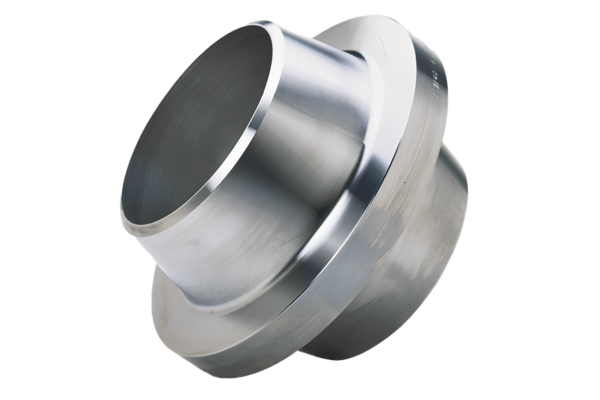
An anchor flange is a heavy forged ring welded into a pipeline and embedded in a concrete anchor block, so that the pipe is held firmly at that point. Raaj Fittings manufactures and exports anchor flanges in carbon steel, low-temperature carbon steel, alloy steel and stainless steel, made to the purchaser's design calculations and drawings.
Pipelines expand and contract with temperature, and internal pressure produces thrust at bends, tees and valves. An anchor flange transfers these axial forces from the pipe into the concrete, preventing the line from moving and protecting connected equipment, valve stations and above-ground sections from overload.
Every anchor flange is supplied with EN 10204 3.1 mill test certificates, with 3.2 certification and third-party inspection on request.
We export anchor flanges to EPC contractors, refineries and stockists across the Middle East and GCC, Europe and the Americas, made to the ASME, EN or DIN standard your project specifies, with PED-compliant supply for European projects on request.
Anchor Flange Specifications
To suit pipeline sizes to order; dimensions to the purchaser’s drawing or design calculation
Designed for the axial load, pressure and temperature of the pipeline, in line with codes such as ASME B31.4 and B31.8
One-piece forging: central ring with integral weld necks on both sides, bevelled for butt welding
Bevelled to ASME B16.25 and bored to match the pipeline wall thickness
Forged, heat treated as required by the material specification, and CNC machined
Impact testing for low-temperature service and ultrasonic examination as specified
EN 10204 3.1 mill test certificate as standard; EN 10204 3.2 on request
Materials & Grades
We supply anchor flanges in the following materials and grades. All grades are supplied with EN 10204 3.1 / 3.2 Mill Test Certificates.
Stainless Steel Anchor Flanges
Stainless steel flanges offer excellent corrosion resistance and are essential in chemical, pharmaceutical, food processing, and marine environments.
(ASTM A182 F304 / F304L) General corrosion resistance
(ASTM A182 F316 / F316L) Superior resistance to chlorides, acids; marine & pharmaceutical service
(ASTM A182 F316H) High-temperature elevated creep strength
(ASTM A182 F321) Titanium-stabilized; suitable for sustained elevated temperatures
(ASTM A182 F347) Columbium-stabilized; used in heat exchangers and high-temperature piping
High alloy; exceptional resistance to strong acids
Carbon Steel Anchor Flanges
Carbon steel is the standard choice for general-purpose, non-corrosive, and elevated-temperature services. The primary grade for forged carbon steel flanges is ASTM A105, and for low-temperature service, ASTM A350 LF2.
Primary grade for forged carbon steel fittings and flanges — covers ambient and elevated-temperature service in pressurised piping systems.
Low-temperature carbon steel, impact-tested for service down to -46°C (-50°F) — LNG, cold climate, and cryogenic piping applications.
Alloy Steel Anchor Flanges
Alloy steel flanges are specified for high-temperature, high-pressure service in power generation, petrochemical, and refinery applications.
(5% Cr, ½% Mo) Designed for elevated temperature refinery service
(9% Cr, 1% Mo) Suitable for high-temperature steam and hydrogen service
(1¼% Cr, ½% Mo) Widely used in thermal power plant piping systems
(2¼% Cr, 1% Mo) Used in high-temperature pressure vessels and reactors
(9% Cr, 1% Mo, V, Nb) Engineered for ultra-high-temperature power plant steam lines
How an Anchor Flange Works
Unlike other flanges, an anchor flange is not bolted to anything. It has a thick central ring and a weld neck on each side. The two necks are butt-welded into the pipeline, and the ring is cast into a reinforced concrete block. When the pipe tries to move, the ring bears on the concrete, which carries the force into the ground.
- Fixes the pipeline — stops axial movement caused by thermal expansion and pressure thrust.
- Protects equipment — prevents pipeline loads reaching pumps, compressors, valves and launchers.
- Controls soil movement effects — holds the line where settlement or slope could make it creep.
- Full-strength welds — butt-welded necks can be radiographed like any pipeline joint.
Design Considerations
The ring diameter and thickness depend on the axial force, the bearing capacity of the concrete and the pipe material. The necks are designed for the pipeline pressure and are bored to match the line pipe so that pigs can pass through. The material is chosen to be weldable to the line pipe and, for cold climates, impact-tested for low-temperature service.
Where Anchor Flanges Are Placed
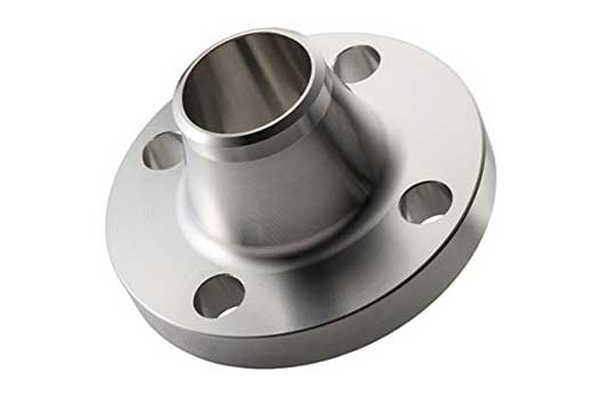
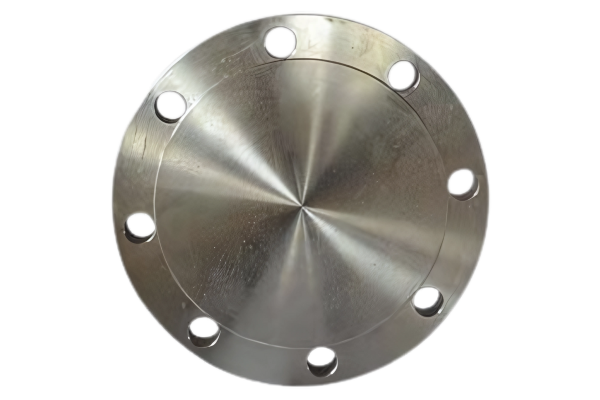
Anchors are typically installed where a buried pipeline emerges above ground, on either side of valve stations, near pig traps, at compressor and pump station boundaries and at changes of direction. At the above-ground end, the line usually continues with weld neck flanges at valves and equipment, and a blind flange closes off pig traps and future connections.
Applications & Industries
- Cross-country oil, gas and product pipelines
- Buried-to-above-ground transitions at valve and metering stations
- Pig launcher and receiver installations
- Compressor and pump station boundaries
- Water transmission and district heating pipelines
- Pipelines crossing slopes, rivers and areas of soil settlement
See all flange types, and our buttweld fittings for pipeline bends and tees.
Testing, Inspection, Marking & Packing
Anchor flanges are produced under our quality assurance process:
- Incoming material verification with PMI testing
- Chemical and mechanical testing to the applicable ASTM specification, with impact tests where required
- Heat treatment as required by the material grade
- Ultrasonic examination of the forging when specified
- Dimensional inspection of ring, necks, bore and weld bevels against the approved drawing
- Marking with grade, size, heat number and purchaser’s tag
Supplied with EN 10204 3.1 mill test certificates; EN 10204 3.2 certificates and third-party inspection are available on request.
Flanges are packed for export with gasket faces protected by covers, rust-preventive coating on carbon and alloy steel, and seaworthy wooden cases; marking, tagging and packing to your specification are available on request.
Why Choose Raaj Fittings for Anchor Flanges?
Raaj Sagar Steels has supplied piping components since 2003 and today manufactures flanges at two plants in India for buyers in the Middle East, Europe and the Americas.
- Manufactured in-house — Anchor flanges are made in our own plants, so material, dimensions and delivery stay under our control.
- Ready stock, short lead times — common sizes and grades are held in stock for prompt dispatch; other sizes, grades and specials are manufactured to order.
- Certified quality — ISO 9001:2015, ISO 14001:2015 and ISO 45001:2018 certified; PED 2014/68/EU and IBR supply available, and NACE MR0175 / ISO 15156 material on request.
- 100% material verification — PMI testing on incoming material and EN 10204 3.1 mill test certificates with every order; 3.2 certificates on request.
- Third-party inspection ready — we regularly work with SGS, Bureau Veritas, TÜV and DNV.
- Export documentation — MTCs, certificates of origin, packing lists and inspection reports to suit projects in the GCC, Europe and the Americas.
- Export packing — seaworthy packing with end and face protection, and packing to your specification on request.
- Fast response — our team replies to enquiries within one business day.
Anchor Flanges — FAQs
An anchor flange is a forged ring with a weld neck on each side. It is welded into a pipeline and set in a concrete block to stop the pipe moving at that point.
Temperature changes and internal pressure create axial forces in a pipeline. Anchor flanges transfer these forces into the ground, protecting valves, equipment and above-ground sections from overload.
No. An anchor flange has no bolt holes. Both necks are butt-welded into the pipeline and the ring is embedded in concrete.
The ring and necks are designed for the pipeline’s axial load, pressure, temperature and pipe size. We manufacture to the purchaser’s design calculation or drawing.
Yes. The bore is machined to match the line pipe, so pigs and inspection tools can pass through without obstruction.
Yes. We supply anchor flanges for projects under the European Pressure Equipment Directive (PED 2014/68/EU), and with IBR certification for Indian boiler applications. NACE MR0175 / ISO 15156 compliant material is also available on request for sour service in the Middle East and the Americas.